We use cookies to measure which pages and guides are actually used, so we can improve them. Analytics and marketing cookies are set only if you allow them: the site works fully without them.
Passing a Liquidation Resolution from Abroad: Apostille, Translation and Power of Attorney
HomeBlogPassing a Liquidation Resolution from Abroad: Apostille, Translation and Power of Attorney
Quick answer
A foreign shareholder does not need to be in Turkey to dissolve a Turkish company. The resolution is signed abroad before a notary and apostilled under the 1961 Hague Convention, then translated by a sworn translator in Turkey and certified by a Turkish notary before it is filed with the trade registry. Alternatively, the shareholder grants an apostilled power of attorney to a Turkish lawyer, who attends the general meeting, signs the resolution and handles the registration. Corporate shareholders also supply a current extract showing who may sign.
The dissolution of a Turkish company begins with a decision of its shareholders, and for most foreign-owned companies the shareholders are not in Turkey. The Commercial Code does not require them to be. What it requires is a resolution in a form the trade registry will accept, and there are two ways to produce one from abroad.
Route one: sign the resolution abroad
The shareholder (an individual, or the authorised signatory of a parent company) signs the dissolution resolution in their own country. For the document to be recognised in Turkey it needs:
Notarisation in the country of signature, confirming the identity of the signatory and, for a company, their authority.
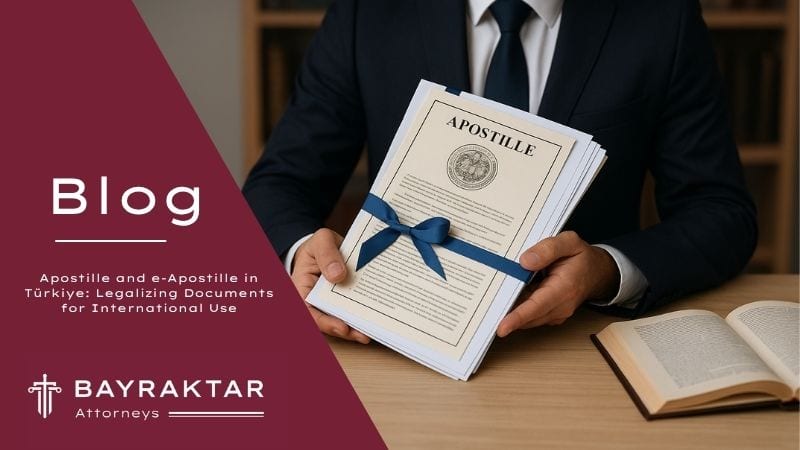
Apostille under the 1961 Hague Convention, issued by the competent authority of that country. Turkey is a party, so no consular legalisation is needed for documents from other member states. Documents from non-member countries go through the Turkish consulate instead.
Sworn translation into Turkish, made in Turkey by a translator registered with a notary, and notarial certification of the translation.
The registry then receives the Turkish translation with the apostilled original attached. Where the shareholder is a company, a further apostilled document is required: a current registry extract or certificate of good standing showing that the person who signed was entitled to bind the company on the date of signature.
Route two: a power of attorney to a Turkish lawyer
The more practical route for most clients is to sign a single power of attorney abroad, in the same notarised and apostilled form, authorising a Turkish lawyer to attend the general meeting, vote for dissolution, sign the minutes and the registry filings, and appoint the liquidator. Everything after that happens in Turkey without further documents from the shareholder. A power of attorney signed at a Turkish consulate abroad needs no apostille at all, because the consulate acts as a Turkish notary.
The power of attorney must be specific. Turkish registries and notaries reject general powers that do not mention the company by name and the acts (dissolution, liquidation, appointment of a liquidator, registry and tax filings) in terms. We draft the text in Turkish and English side by side, so that the notary abroad can certify what the signatory is signing and the registry in Turkey can read it without a separate translation of the foreign text.
What the resolution must contain
The decision to dissolve the company and place it into liquidation, with the required majority recorded: for a limited liability company, two-thirds of the votes represented and an absolute majority of the capital.
The appointment of the liquidator or liquidators, their identity details and whether they sign jointly or alone.
Authority for the liquidator to register the decision and to carry out the liquidation.
For a single-shareholder company, the decision is recorded as a written resolution of the sole shareholder.
Common reasons filings are rejected
The apostille is attached to a copy rather than the notarised original.
The translation was made abroad rather than by a sworn translator in Turkey.
The corporate extract is older than the registry accepts, or does not show the signatory's authority.
The signatory's name in the passport, the resolution and the company's MERSIS record do not match exactly.
The power of attorney is general, or names the wrong company entity.
Each of these costs a further round of signature and courier, typically three to six weeks. Getting the document right the first time is most of the value we add at this stage of a liquidation. If the same shareholder also needs a power of attorney for other Turkish matters (property, residence, litigation) one document can cover them together; see our general guide on issuing a power of attorney from abroad.
Frequently asked questions
Do I need to be in Turkey to dissolve my company?
No. Either sign the resolution abroad with notarisation and apostille, or grant a specific power of attorney to a Turkish lawyer who attends the meeting and signs for you.
Can the translation be done in my own country?
Registries expect a translation by a sworn translator in Turkey, certified by a Turkish notary. Translations made abroad are generally not accepted.
My country is not a party to the Hague Apostille Convention. What then?
The document is legalised by the Turkish consulate in that country instead of being apostilled. The remaining steps are the same.
Is a power of attorney signed at the Turkish consulate valid without an apostille?
Yes. A Turkish consulate acts as a Turkish notary, so a power of attorney issued there is used directly in Turkey without apostille or translation.
How specific does the power of attorney need to be?
It must name the company and list the acts: attending the general meeting, voting for dissolution, appointing the liquidator, and making registry, tax and bank filings. General powers are rejected.