Quick AnswerIn Turkey, residential rent increases are legally capped at the twelve-month average change in the Consumer Price Index (TÜFE), published monthly by TÜİK, under Code of Obligations article 344. The landlord applies this percentage once a year on renewal. The temporary 25% ceiling expired on 1 July 2024, so increases now follow the TÜFE cap.
Turkey Rent Increase Calculator
Calculate a new rent using the rate you enter. Selecting a renewal month fills the official twelve-month CPI average from the source table below. Check the publication date, any lower contractual limit and the rules governing your lease. Decimal rent amounts such as 20,000.50 are supported.
Monthly rent increase reference table
Coverage through October 2026. These are TÜİK twelve-month averages, not monthly or annual inflation. Each renewal month is paired with the preceding CPI reference month. Check the publication date, exact renewal date and lease terms before applying a figure.
Sources checked: 2026-10-06
Rent Increase Limits in Turkey: The Short Answer
In Turkey, a landlord cannot raise residential rent by any amount they choose. For residential leases governed by the Turkish Code of Obligations (Türk Borçlar Kanunu, arts. 344–346), the annual rent increase is legally capped at the twelve-month average change in the Consumer Price Index (TÜFE) published monthly by the Turkish Statistical Institute (TÜİK). Any contract clause allowing a larger increase is invalid to the extent it exceeds this cap. The rule lets rents track inflation while protecting tenants from arbitrary demands, and it applies equally to Turkish and foreign tenants and landlords.
Below we explain exactly how the TÜFE cap is calculated, the now-expired 25% ceiling, how commercial leases differ, the important five-year rule, and the practical steps both tenants and landlords should take. Use the calculator on this page to estimate the maximum lawful increase for your own renewal.
How the TÜFE Rent Increase Cap Works
What is TÜFE?
TÜFE (Tüketici Fiyat Endeksi) is Turkey's Consumer Price Index: the official measure of consumer inflation. TÜİK publishes it monthly, usually within the first days of each month for the previous month. The number that matters for rent is not the single-month inflation figure and not the simple year-on-year rate, but the twelve-month average rate of change.
The twelve-month average rule
Article 344 of the Code of Obligations provides that a rent increase agreed for a renewal year is valid only up to the twelve-month average TÜFE for the relevant period. In plain terms, TÜİK compares the average index over the last twelve months against the average over the previous twelve months, and that percentage is the ceiling. If your lease has no valid increase clause, a judge will still set the increase at no more than this same twelve-month average TÜFE.
Because this figure changes every month, we do not quote a fixed percentage here. Instead, check the current 12-month average TÜFE cap using our monthly updates below or the calculator, applying the figure for the month in which your lease renews. For example, if your lease renews in September, you apply the twelve-month average TÜFE published for September, and a rent of 20,000 TL rises by exactly that percentage: never more for a residential lease.
The 25% Rent Increase Cap (2022–2024)
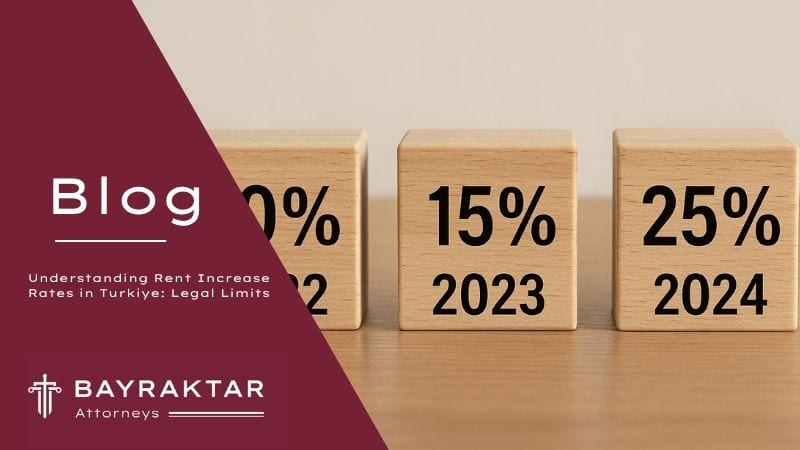
Between mid-2022 and mid-2024, Turkey applied an emergency ceiling. Through a provisional article added to the Code of Obligations, residential rent increases were capped at 25% even when the twelve-month average TÜFE was significantly higher. This temporary measure ran from 11 June 2022 and, after one extension, expired on 1 July 2024.
For renewals from 2 July 2024, the 25% ceiling no longer applies. Residential rent increases have reverted to the standard twelve-month average TÜFE cap. It is important to note that the 25% limit only ever applied to residential (konut) leases: commercial leases were never subject to it.
When and How the Increase Is Applied
A lawful rent increase is tied to the anniversary of the contract, the start of each new rental year on renewal, not to a date the landlord picks at will. The key points are:
- The increase applies once per year, on renewal, based on the TÜFE figure published for the relevant month.
- It must be consistent with the lease's escalation clause and can never exceed the legal cap.
- The landlord should notify the tenant of the new rent in writing before the renewal date; a clear, documented notice prevents later disputes.
- The tenant is only obliged to pay up to the lawful amount, and an unlawful clause does not automatically bind them.
Residential vs Commercial Leases
The rules differ depending on whether the property is a home or a business premises. Roofed workplaces (offices, shops, warehouses with a structure: çatılı işyeri) are largely governed by the same Code of Obligations provisions as homes, including the TÜFE cap. Purely commercial arrangements that fall outside those provisions enjoy more freedom of contract.
| Feature | Residential lease (konut) | Roofed commercial lease (çatılı işyeri) |
|---|
| Annual increase cap | 12-month average TÜFE | 12-month average TÜFE (art. 344 applies) |
| Was the 25% cap applicable? | Yes, from 2022 to 1 July 2024 | No, never |
| Escalation clause | Valid only up to the TÜFE cap | Honoured but capped at TÜFE where the Code applies |
| Five-year rent determination | Available to either party | Available to either party |
| Governing law | Code of Obligations arts. 344–346 | Code of Obligations (roofed workplaces) |
The nuance: a commercial escalation clause is generally enforced as written, but where the Code of Obligations applies it still cannot push the increase above the twelve-month average TÜFE. Leases fully outside these provisions, for example certain non-roofed or specialised commercial contracts, may allow different, freely negotiated escalation, and sometimes currency indexation subject to Turkey's foreign-exchange rules. A lawyer should confirm which regime governs your specific lease before you rely on any clause.
The Five-Year Rule: Rent Determination Lawsuits
The TÜFE cap keeps annual increases predictable, but over several years the contract rent can drift far below the market rate. To address this, Article 344 gives either party a right after five years. At the end of every five-year period, a judge can set the rent at a fair figure (weighing the twelve-month average TÜFE, the condition of the property, and comparable rents in the area) without being bound by the TÜFE cap.
This is done through a rent determination lawsuit (kira tespit davası). Either the landlord or the tenant may file it. To take effect from the start of the next rental year, it generally must be filed before that year begins, or the other party given proper written notice within the required window. Outside the five-year reset, a rent determination case can still fix an unclear or disputed rent, but only within the TÜFE ceiling.
If the Landlord Demands More Than the Legal Cap: Steps for Tenants
Foreign tenants are sometimes pressured to accept increases well above the lawful limit. You have clear protections. Since 1 September 2023, mediation (arabuluculuk) is a mandatory first step before most rental lawsuits can be filed.
- Calculate the maximum lawful increase using the current 12-month average TÜFE for your renewal month (use the calculator above).
- Pay the lawful amount on time: continuing to pay the correct rent protects you from eviction for non-payment.
- Notify the landlord in writing that you accept the increase up to the legal cap but refuse the excess, and keep a copy.
- If the landlord insists, apply for mandatory mediation before any court case.
- If mediation fails, file or defend a rent determination lawsuit so a court can confirm the lawful rent.
- Keep all payment receipts and correspondence: documentation is decisive in Turkish rental disputes.
Landlord's Lawful Options and Process
Landlords have legitimate ways to keep rent in line with the market without breaking the law.
- Include a clear, lawful escalation clause tied to the twelve-month average TÜFE when drafting the lease.
- Each year, calculate the increase using the correct TÜFE figure and send the tenant timely written notice of the new rent.
- After five years, consider a rent determination lawsuit to reset the rent to market value if it has fallen behind.
- For any dispute, use mandatory mediation first (since September 2023) before starting litigation.
- Never resort to self-help: changing locks, cutting utilities, or forcing a tenant out is unlawful and creates liability.
- Pursue eviction only on lawful grounds and through the proper procedure.
Rent Disputes and Eviction
Rent disputes and eviction are closely linked but legally separate. A landlord cannot evict a tenant simply for refusing an unlawful increase. Lawful eviction requires specific grounds, such as persistent non-payment (typically after two justified written warnings within a rental year), the owner's genuine need to occupy the property, or a valid written eviction undertaking, and it must proceed through the courts or enforcement offices. Because these grounds are technical and easy to get wrong, both sides benefit from advice before acting.
How a Lawyer Helps, Especially for Foreigners
Turkish rental law is protective but highly procedural, and language and distance make it harder for foreign clients to enforce their rights. A lawyer can:
- Review or draft your lease so the escalation clause is lawful and enforceable.
- Verify the correct TÜFE figure and calculate the exact lawful increase.
- Represent you in mandatory mediation and, if needed, in rent determination or eviction proceedings.
- Handle notices, deadlines, and court filings while you are abroad, usually under a power of attorney.
- Advise on foreigner-specific issues such as currency clauses, tax, and the residence-permit implications of your tenancy.
Whether you are a tenant facing an excessive demand or an owner protecting your investment, early legal advice usually costs far less than a drawn-out dispute.
Frequently Asked Questions
What is the maximum legal rent increase in Turkey?
For residential leases, the maximum annual increase is the twelve-month average change in the Consumer Price Index (TÜFE) published by TÜİK, under Turkish Code of Obligations article 344. Any contract term allowing a higher increase is invalid above that cap. The figure changes monthly, so always use the TÜFE for your renewal month.
Is the 25% rent increase cap still in force?
No. The 25% ceiling on residential rent increases applied from 11 June 2022 and expired on 1 July 2024. Since then, residential increases have reverted to the standard twelve-month average TÜFE cap. The 25% limit applied only to residential leases and never to commercial ones.
How is the TÜFE rent increase calculated?
Take the twelve-month average TÜFE rate published by TÜİK for the month your lease renews, then apply that percentage to your current rent. For example, a rent of 20,000 TL with a given 12-month average TÜFE rises by exactly that percentage, and never more for a residential lease governed by article 344.
Can my landlord increase the rent more than once a year?
No. Rent may be increased only once per rental year, on the contract's anniversary or renewal date. A mid-year increase is not lawful for a fixed-term residential lease. The single annual increase is capped at the twelve-month average TÜFE and should be notified to you in writing before renewal.
What can I do if my landlord demands an illegal increase?
Pay the lawful amount on time and notify the landlord in writing that you refuse the excess. Since September 2023 you must attempt mandatory mediation before suing. If mediation fails, a rent determination lawsuit (kira tespit davası) lets a court confirm the correct rent. Keep all receipts and correspondence as evidence.
What is the five-year rule?
After five years, either party can ask a court to set the rent at a fair market figure through a rent determination lawsuit. The judge is not bound by the TÜFE cap and weighs the property's condition, comparable local rents, and TÜFE. This lets rents that have fallen behind be reset to market value.
Do commercial leases follow the same rent cap?
Roofed commercial premises such as offices and shops are largely governed by the same Code of Obligations rules, so their increases are also capped at the twelve-month average TÜFE. The contractual escalation clause is honoured but cannot exceed that ceiling. Some non-roofed or specialised commercial leases allow more freedom; check which regime governs yours.
Is mediation required before a rent lawsuit in Turkey?
Yes. Since 1 September 2023, mediation (arabuluculuk) is a mandatory first step for most rental disputes, including rent determination and eviction claims. You cannot file the lawsuit until mediation has been attempted and failed. Mediation is often faster and cheaper than court, and a lawyer can represent you throughout the process.
Facing a rent increase dispute in Turkey?
Our English-speaking lawyers help foreign tenants and landlords with lawful increases, mediation and rent determination cases.
Talk to a lawyer →