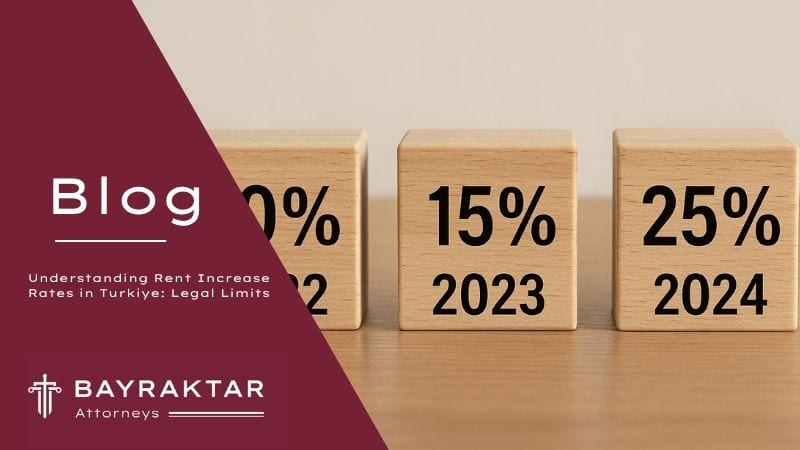
Quick answerTurkish residential rent increases on renewal are capped at the twelve-month average Consumer Price Index (TÜFE), published monthly by TÜİK, unless the contract sets a lower limit. A temporary 25% cap applied to renewals between 11 June 2022 and 1 July 2024; from 2 July 2024 that ended, and the ordinary CPI-average ceiling under Article 344 of the Code of Obligations applies again to residential and roofed workplace leases alike. A rent determination lawsuit is available only after five years of tenancy.
Monthly rent increase reference table
Coverage through October 2026. These are TÜİK twelve-month averages, not monthly or annual inflation. Each renewal month is paired with the preceding CPI reference month. Check the publication date, exact renewal date and lease terms before applying a figure.
Sources checked: 2026-10-06
What This Blog Covers
What is TÜFE (Consumer Price Index)?
What is a Rent Increase Rate?
How is Rent Increase Calculated?
What is the Maximum Rent Increase Allowed?
Has the 25 Percent Rent Cap Been Lifted?
Legal Support from Our Real Estate Lawyers
What is TÜFE?
TÜFE, or the Consumer Price Index, is a crucial economic indicator in Türkiye. It reflects the average price change over time for goods and services purchased by consumers. TÜFE is published monthly by the Turkish Statistical Institute (TÜİK) and is often used as a reference point in rental agreements to determine annual rent increases.
Since it reflects inflation trends, TÜFE serves as a fair benchmark for both landlords and tenants when adjusting rental values, helping maintain a balanced relationship and reduce disputes.
What is a Rent Increase Rate?
The rent increase rate refers to the legally or contractually permitted percentage by which a landlord may raise the rent for a leased property. In Türkiye, rent increases are typically made annually, though the frequency and method can be adjusted based on the terms of the lease and applicable laws.
Turkish law mandates that rent increases align with economic indicators like TÜFE. If parties have not otherwise agreed, the legal limit set by the Turkish Code of Obligations applies. For renewals, you can compare the official figures such as the February 2026 rent increase ceiling of 33.98 percent with the April 2026 ceiling of 32.82 percent announced by TÜİK.
How is Rent Increase Calculated?
The temporary residential 25% limit applied to renewals from 11 June 2022 through 1 July 2024 inclusive, subject to the statutory conditions. A lower applicable twelve-month CPI average remained the limit.
For renewals from 2 July 2024, the temporary 25% rule no longer applies. The ordinary annual renewal ceiling is the twelve-month average CPI; a lower valid contractual limit must also be respected.
While this restores flexibility for landlords, it also calls for careful contract drafting to ensure compliance and fairness. Where landlords believe the contractual figure no longer reflects market value, a higher rent determination lawsuit may be an option.
What is the Maximum Rent Increase Allowed?
For ordinary renewals of residential and roofed workplace leases, agreed increases cannot exceed the twelve-month average CPI. The court determination rules after five years require a separate assessment.
Roofed workplace leases are also subject to Article 344. A commercial label alone does not remove the CPI ceiling. Foreign-currency leases have separate statutory and foreign-exchange restrictions; check the specific contract before applying an adjustment.
Has the 25 Percent Rent Cap Been Lifted?
Yes. The temporary residential 25% limit covered renewal dates through 1 July 2024 inclusive. Renewals from 2 July 2024 fall outside that temporary rule.
The expired 25% rule concerned homes. Roofed commercial premises remain subject to the ordinary Article 344 framework, including the CPI ceiling for ordinary annual renewals. See our rent increase service guide for the distinction and five-year court determination.
Also Read; How long does a rent adjustment lawsuit take in Turkey
Automatic Renewal of Lease Agreements
In Türkiye, lease agreements generally do not need to be actively renewed or re-signed on an annual basis. Contracts automatically continue after the first term expires, all other terms of the original agreement remain valid and binding, and only the rent amount is updated based on the applicable CPI figure for the renewal month. A landlord generally cannot terminate a residential or workplace lease simply because the fixed term has ended; specific, limited legal grounds are required to end the tenancy once it has automatically continued past its first term.
Rent Increase Calculation Example
Consider a lease with a current monthly rent of 100,000 Turkish Lira renewing in April 2026:
- Current Rent: 100,000 TRY
- Applicable Increase Rate: 32.82 percent
- Increase Amount: 32,820.00 TRY
New Rent: 132,820.00 TRY
This represents the maximum permissible increase for this renewal month. The parties may agree on a lower rate, including no increase at all, but neither party can lawfully impose a higher figure through a unilateral demand.
Legal Consequences of Excessive Rent Demands
If a landlord demands an increase above the legal limit:
- The excess amount is not enforceable, regardless of whether the tenant initially agreed to it under pressure or through a misunderstanding of the applicable rate
- The tenant has the right to object to the excess portion and to continue paying only the lawful amount
- The dispute may be taken to court if the parties cannot resolve it directly, with the tenant generally entitled to recover any excess amount already paid
Where a landlord genuinely believes the current rent has fallen well below fair market value, most commonly because the tenancy has continued for a number of years without the rent keeping pace with the local market, the proper legal route is a higher rent determination lawsuit rather than a unilateral increase above the CPI ceiling; this type of lawsuit generally only becomes available once the tenancy relationship has continued for at least five years, and it is decided by a court based on comparable market rents rather than by the landlord's own assessment.
Why Legal Advice Matters
In high-inflation environments like Türkiye, disputes between landlords and tenants often arise during rent renewal periods. It is essential for both parties to agree on a fair rent increase in writing, ideally through a legally valid protocol drafted or reviewed by an attorney.
Bayraktar Attorneys advises clients to avoid verbal or informal agreements. Without a clear contract, even the most well-intentioned agreement can lead to costly legal battles, and a breach can carry serious legal consequences of breaching rental contracts.
Why Rent Law in Türkiye Requires Special Attention
Tenants often assume their rights are automatically protected by law, but this is not always the case. Property owners, on the other hand, may face losses if they fail to include protective clauses regarding inflation and interest rates.
High inflation over the last decade has pushed some tenants to delay payments or ignore their obligations, assuming the value of money will decrease. However, with current interest rates reaching record highs, failing to pay rent on time may now result in significant financial consequences for tenants.
A lease review should identify the applicable renewal limit, payment obligations, and any currency restrictions before escalation terms are agreed.
Our Legal Services
At Bayraktar Attorneys, we provide expert legal services in all aspects of rent law in Türkiye, including:
Drafting or reviewing lease agreements
Negotiating rent increase protocols
Filing or defending rent determination lawsuits
Representing parties in eviction or rent collection proceedings
Advising foreign investors with rental income properties
We work closely with both landlords and tenants to protect their rights under the Turkish Code of Obligations and ensure rental relationships remain lawful and sustainable.
Contact Bayraktar Attorneys for Rent Law Services
Whether you are a tenant, landlord, or investor, we can help ensure your rental relationship is legally secure. Our English-speaking legal team has extensive experience in rent law, lease disputes, and enforcement proceedings in Türkiye.
Let us help you avoid conflict and protect your investment with confidence.
Legal sources: TBK 344; Law 7456, Article 23 (temporary Article 2).