Quick answerCommon areas in Turkish apartment buildings, such as foundations, stairwells, elevators, roofs and shared utility installations, are automatically jointly owned under Article 4 of the Condominium Ownership Law. Maintenance and renovation costs are generally shared in proportion to each unit's land share (arsa payi), though owners who do not benefit from a purely luxury improvement may be exempt, and major changes require approval by the owners' assembly.
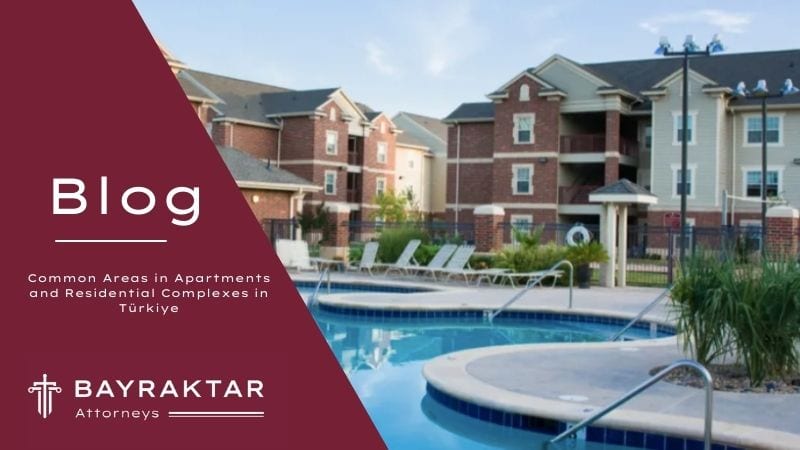
In apartment buildings and residential complexes in Türkiye, common areas play a critical role in both daily life and the legal structure of property ownership. These areas affect not only neighbor relations but also the overall value and functionality of the property.
Disputes regarding the use, maintenance, and management of common areas are among the most frequent legal issues in real estate practice. These matters are primarily governed by the Condominium Ownership Law (Kat Mülkiyeti Kanunu), relevant regulations, and the building’s management plan.
This guide prepared by Bayraktar Attorneys explains what common areas are, how they are used, and the legal rights and obligations of property owners.
What Is a Common Area?
A common area refers to parts of a property that are not privately owned as independent units (such as apartments or shops) but are allocated for the joint use of all property owners.
These areas are:
-
Owned collectively by all unit owners
-
Financed through shared expenses
-
Managed under the building’s management structure
What Are Common Areas in Residential Complexes?
According to Turkish law, particularly Article 4 of the Condominium Ownership Law, certain areas are automatically considered common areas.
These include:
-
Building foundations
-
Main structural walls, columns, and beams
-
Partition walls between independent units
-
Floors and ceilings
-
Entrances and courtyards
-
Staircases, corridors, and elevators
-
Landings and shared hallways
-
Caretaker rooms and service areas
-
Shared laundry rooms and storage areas
-
Parking areas and garages
-
Heating rooms and technical infrastructure
-
Water tanks and utility systems
-
Shelters and emergency areas
-
Sewer systems and waste disposal systems
-
Roofs, chimneys, terraces, and drainage systems
-
Fire escapes
-
Shared electricity, water, and gas installations
-
Common television and internet infrastructure
In addition to these, any area defined in the management plan may also be considered a common area depending on the characteristics of the property.
Who Pays for Renovations and Improvements in Common Areas?
As a general rule:
However, there are important exceptions:
-
If the improvement is considered luxury, only the owners who request it may be required to pay
-
If the improvement does not benefit all owners, those who do not benefit may be exempt
-
Major changes require approval by the condominium owners’ assembly
Can Common Areas Be Rented Out?
Yes, but the decision depends on the nature of the area.
Income generated from renting common areas:
-
Is considered rental income
-
Must be shared among all property owners
-
May be subject to tax obligations
What Happens When an Apartment Is Rented?
When an independent unit is rented:
The owner may only access the property as a visitor, typically with the tenant’s consent.
Rights of Property Owners Regarding Common Areas
Under Turkish law, property owners have the following rights:
-
Joint ownership rights over common areas are proportional to their land share
-
The right to use and benefit from these areas
-
The right to file legal actions in case of unlawful interference
Legal remedies may include:
Obligations of Property Owners
Property owners are subject to several legal obligations, including:
-
Using common areas in accordance with the principle of good faith
-
Protecting the structural integrity and architectural harmony of the building
-
Complying with legal procedures when making changes or improvements
-
Allowing access to their unit when necessary for repairs affecting common areas
-
Contributing to maintenance and operational expenses
These obligations may be further detailed in the management plan.
Can a Penal Clause Be Included in the Management Plan?
Yes. The management plan may include penal clauses to ensure compliance with obligations related to common areas.
This means:
-
Owners who violate rules may be required to pay penalties
-
The building manager may be authorized to collect such penalties
-
Collected amounts are treated as part of the building’s income and used for expenses
Important note:
The existence of a penalty does not eliminate the underlying obligation.
The owner must still fulfill their duties in addition to paying the penalty.
Conclusion
Proper management of common areas is essential for maintaining order, property value, and peaceful living conditions in apartment buildings and residential complexes in Türkiye.
Most disputes arise from misunderstandings regarding:
To avoid legal conflicts, it is highly recommended to structure management plans and decisions with professional legal guidance.
At Bayraktar Attorneys, we assist both property owners and investors in resolving disputes and ensuring compliance with Turkish real estate law.