We use cookies to measure which pages and guides are actually used, so we can improve them. Analytics and marketing cookies are set only if you allow them: the site works fully without them.
Annotations (şerhler) are records entered in the Turkish land registry that restrict, secure or condition an owner's rights, and they bind current and future owners, affecting whether a property can be sold, transferred or mortgaged. Key types include the family residence annotation, which blocks sale or mortgage of the family home without the other spouse's consent, the non-transferable annotation imposed by a court injunction, and the right of residence (sükna hakkı).
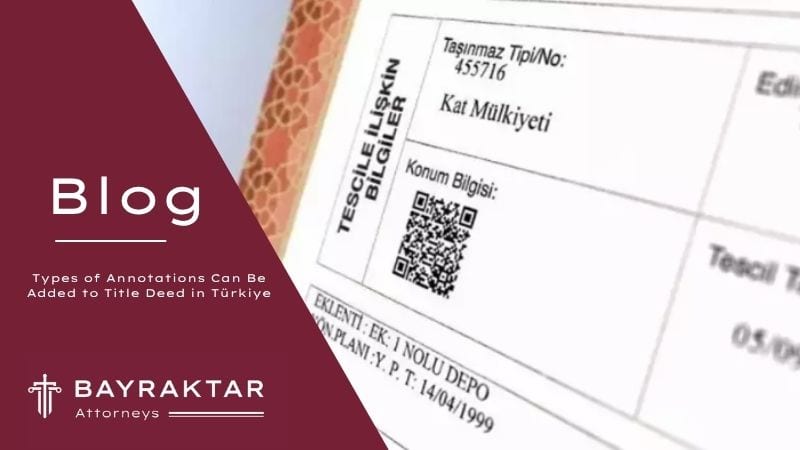
In the intricate landscape of Turkish real estate, the title deed (tapu senedi) serves as the cornerstone of property ownership, meticulously documenting rights, obligations, and any encumbrances associated with a given property. For both domestic and international investors, a thorough understanding of the various annotations (şerhler) and declarations (beyanlar) recorded in these deeds is not merely beneficial but absolutely essential. Bayraktar Attorneys, with its deep expertise in Turkish property law, provides unparalleled legal guidance to ensure clients navigate these complexities with confidence, safeguarding their investments and property rights.
The Fundamental Role of Annotations in Turkish Property Law
Annotations, or şerhler, are legal records entered into the land registry that serve to restrict, secure, or condition the rights of a property owner. They act as a critical legal warning or limitation, ensuring that specific rights or obligations tied to the property are respected by all current and future owners. These annotations can arise from court decisions, contractual agreements, or specific legal provisions, and they can significantly impact a property's ability to be sold, transferred, or mortgaged. Understanding the nature and implications of each annotation is paramount before engaging in any real estate transaction, and forms a core part of the significance of annotations and declarations in title deeds.
Key Types of Annotations in Turkey and Their Legal Effects
Turkish property law features several distinct types of annotations, each with unique legal consequences:
Family Residence Annotation (Aile Konutu Şerhi): This crucial annotation, rooted in the Turkish Civil Code, protects the family home. It stipulates that one spouse cannot sell, mortgage, or otherwise restrict rights on the family residence without the explicit consent of the other spouse, even if they are not a registered owner. This annotation, which must be requested by a spouse, prevents unilateral transactions and ensures familial security. Transactions made without such consent are considered invalid.
Non-Transferable / Non-Sellable Annotation (Satılamaz/Devredilemez Şerhi): Often imposed by a court through a precautionary injunction (ihtiyati tedbir), this annotation prevents the sale or transfer of a property if there is a risk of significant damage, delay, or loss of rights for a party. It ensures the property remains untransferred until the court order is lifted. Similarly, a mortgage agreement with a maximum limit can also serve a protective function.
Right of Residence (Sükna Hakkı): Governed by Articles 823–825 of the Turkish Civil Code, this right grants a specific individual (not a property) the right to reside in a property. Established via a notarized contract and registered in the "easement rights" section of the land registry, this right is non-transferable and non-inheritable, terminating with the death of the holder or destruction of the property.
Right of Superficies (Üst Hakkı): Under Articles 726 and 826–836 of the Turkish Civil Code, this right allows an individual to construct or maintain a structure on or under another person's land. If granted for 30 years or more, it can be registered as an independent property right, potentially for up to 100 years, and is extendable by agreement. It requires an official notarized contract and registration.
Right of Usufruct (İntifa Hakkı): Regulated by Articles 794–822 of the Turkish Civil Code, this right grants a person the full use and enjoyment of another's movable or immovable property. It is non-transferable and non-inheritable but remains valid even if the property is sold, obligating the new owner to respect the usufruct right.
Pre-emption Right (Şufa Hakkı): Particularly common in shared ownership (paylı mülkiyet) scenarios, this right grants co-owners the first right to purchase if another co-owner decides to sell their share. It must be formally offered through a notary and protects co-owners from unwanted third-party entries into shared ownership.
Redemption Right (Vefa Hakkı): This allows the original seller of a property to reserve the right to buy it back if the buyer decides to resell it. It must be registered in the land registry to be legally enforceable, providing the original seller with a degree of control over the property's future.
Promise of Sale (Satış Vaadi Şerhi): A notarized agreement that secures a buyer's right to purchase a property in the future. This annotation protects the buyer's interest until the actual transfer of ownership occurs and is commonly used in real estate projects and installment-based sales. While valid for ten years between parties, its enforceability against third parties is typically limited to five years. It is especially relevant when purchasing off-plan real estate in Turkey.
Understanding Declarations (Beyanlar) in Turkish Title Deeds
In contrast to annotations, declarations (beyanlar) provide vital insights into the physical attributes, legal status, and specific characteristics of a property. These entries offer a comprehensive picture of the property's condition and any relevant administrative details. Common declarations include:
Consolidation (Tevhit): The merging of adjacent land parcels into a single title deed.
Separation (İfraz): The division of a single parcel of land into multiple parts, each registered separately.
Usufruct Right: While also an annotation, the declaration of a usufruct right in the title deed confirms the right to fully benefit from and use a property.
Pre-emption Right: Similar to usufruct, the declaration of a pre-emption right grants priority in purchasing an immovable property over other buyers.
Lease Annotation in favor of TEK/TEDAŞ: This declaration designates areas for transformers or electricity lines passing through the property parcel, typically for a symbolic price.
These declarations are crucial for due diligence, as they reveal important aspects of the property that could influence its value, usability, or future development potential. Reviewing them alongside a real estate valuation report helps clients gain a complete understanding of the property being considered.
Navigating Property Transactions with Annotations and Declarations
The presence of annotations and declarations on a title deed necessitates a meticulous examination before any property transaction. While a property with an annotation can technically be sold, the buyer must accept and respect the existing annotation, which often restricts the buyer's ability to use or resell the property. For instance, a property with a family residence annotation cannot be transferred without spousal consent, and a property with a court-ordered sale restriction cannot be legally transferred until the order is lifted.
Conducting thorough title searches is a non-negotiable step in property acquisition. These searches reveal potential encumbrances or discrepancies, safeguarding buyers against legal entanglements and fraudulent transactions. From identifying existing pledges to verifying ownership legitimacy, title searches provide invaluable insights, empowering buyers to make informed decisions. You can begin basic verification through TKGM's parcel inquiry system. Outdated records, such as unresolved mortgage annotations, can impede transactions, underscoring the importance of timely updates and expert legal review.
Who Can Request and Remove Annotations?
Annotations can be requested by various parties, including courts (for injunctions), spouses (for family residence), creditors or banks (for mortgages), notaries (for sale promises), and property owners themselves. The specific documents required depend on the type of annotation, often including notarized contracts, marriage certificates, official IDs, and court orders.
The removal or modification of annotations and declarations depends on their nature, whether permanent, temporary, or explanatory. While some, like lease agreements, may be expunged upon expiration, others necessitate judicial or administrative intervention. A frequently asked question concerns whether it is possible to remove the 3-year not-to-sell annotation for Turkish citizenship by investment. Bayraktar Attorneys provides comprehensive support in both adding and removing annotations, ensuring all legal procedures are followed correctly.
The Indispensable Role of Bayraktar Attorneys in Turkish Real Estate
Annotations and declarations on real estate in Turkey serve as critical legal tools to protect family rights, secure creditors, and ensure fair dealings among property owners. However, they also introduce significant complexities and potential restrictions that buyers and sellers must be acutely aware of. The dynamic nature of these legal instruments, coupled with the strict requirements for their registration and removal, underscores the need for expert legal counsel.
Bayraktar Attorneys provides comprehensive legal guidance to foreign and local investors navigating the intricacies of the Turkish real estate system. Our services include:
Thorough Title Deed Due Diligence: Conducting exhaustive checks on title deeds to identify all existing annotations and declarations, ensuring clients are fully aware of any potential risks or limitations.
Expert Advisory: Providing clear, concise, and actionable advice on the legal effects of various annotations and declarations on property rights, sales, and long-term ownership security.
Annotation Management: Assisting with the proper registration of new annotations and the legal removal of outdated or no longer applicable ones.
Dispute Resolution: Representing clients in any disputes arising from annotations or declarations, striving for efficient and favorable outcomes. Where conflicts escalate, we advise on the relevant types of lawsuits in Turkish real estate law.
Strategic Transaction Planning: Guiding clients through the entire real estate transaction process, from initial inquiry to final registration, ensuring legal compliance and protection of interests.
By partnering with Bayraktar Attorneys, clients gain access to unparalleled legal expertise, ensuring that their property transactions in Turkey are conducted with the highest degree of professionalism, transparency, and legal certainty. Our commitment is to empower you with the knowledge and support needed to make informed decisions and secure your real estate investments in Turkey.