Quick answerWhere a traffic accident causes only property damage and the parties agree on the circumstances, they may complete an accident report form themselves without involving the police. The report is submitted to the insurer, which forwards it electronically to the Insurance Information and Monitoring Centre (SBM) by the end of the next business day. Insurers assess liability within three business days; where they disagree, the file goes to the Accident Liability Assessment Commission, which concludes within a further three business days.
This guide explains how the accident report form for traffic accidents resulting only in property damage operates in Turkey, how liability ratios are determined, and what you can do if you disagree with the outcome. It covers the procedure set out in the applicable circular, the deadlines that apply at each stage, and the routes that remain available after the administrative appeal period has expired.
The system is one of the more efficient administrative mechanisms in Turkish practice, but it moves quickly, and the periods for challenging a liability assessment are measured in business days rather than weeks. Drivers who do not act within them frequently assume their position is lost. It generally is not, but the remaining routes are slower and more expensive than the one they missed.
At Bayraktar Attorneys, we advise on traffic accident liability, insurance claims, and the disputes that arise from both. This guide sets out the framework and the practical steps.
Quick answer: Where a traffic accident causes only property damage and the parties agree on the circumstances, they may complete an accident report form themselves without involving the police. The report is submitted to the insurer, which forwards it electronically to the Insurance Information and Monitoring Centre (SBM) by the end of the next business day. Insurers assess liability within three business days; where they disagree, the file goes to the Accident Liability Assessment Commission, which concludes within a further three business days. Each insured party has a one-time right to request reassessment within five business days of notification. Missing that period does not extinguish your rights: the Insurance Arbitration Commission and the courts remain available within the applicable limitation period, which is two years for property damage.
1. What Is an Accident Report Form?
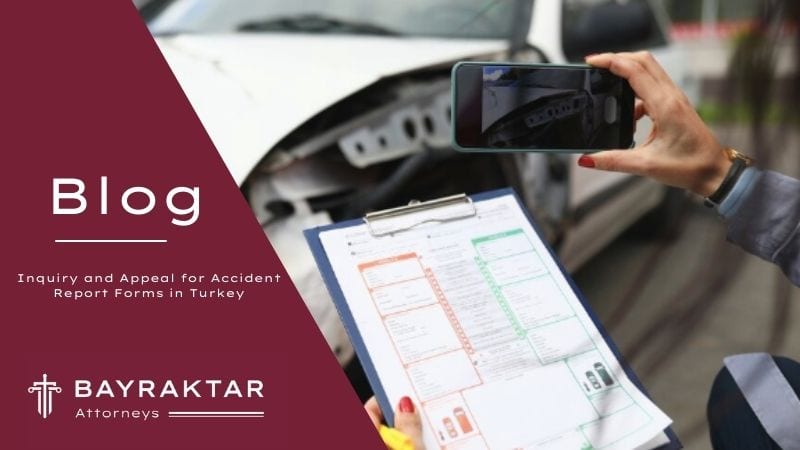
An accident report form is a document completed by the parties to a traffic accident that has resulted only in property damage. Where both parties agree on how the accident occurred, the form removes the need for police attendance and allows the insurance process to begin directly.
Since 1 April 2008, parties to minor accidents have been able to draw up these reports independently. The system was introduced to reduce traffic disruption at accident scenes and to accelerate claims handling, and it also allows drivers to track the progress of their report electronically.
1.1. When the Form Cannot Be Used
This is the threshold question and the source of a significant number of the problems we see.
The self-completed accident report form is available only where the accident has caused property damage alone. Where there is any injury or fatality, the parties may not complete their own report. The police or gendarmerie must attend and prepare the official report, and the process that follows is entirely different: the SBM online objection route is not available, and challenges proceed through the criminal investigation and the courts.
A report prepared by the police is a formal official document and is valid unless the contrary is proved, which is a higher hurdle than challenging a liability assessment made by insurers.
1.2. Completing the Form Correctly
The evidential value of what is recorded at the scene is difficult to overstate, because the liability assessment is made on the basis of the form and any accompanying photographs. Practical points:
- Do not move the vehicles before the positions have been recorded and photographed
- Photograph the damage from multiple angles, and photograph the scene showing the relative positions of the vehicles, road markings, and signage
- Record the date, time, and precise location
- Note the presence of any witnesses and their contact details
- Note whether the location is covered by traffic cameras or nearby security cameras, because this footage is frequently decisive in a subsequent challenge
- Do not sign a description of events you do not accept, and do not accept liability at the scene in order to conclude the matter quickly
2. How the System Works
The procedure runs in a defined sequence, and each stage carries its own deadline.
2.1. Submission of the Report
Following the accident, the parties complete the accident report form and submit it to the claims department of their respective insurance companies.
2.2. Transmission to SBM
The insurance company forwards the report, together with any accompanying photographs, electronically to the Insurance Information and Monitoring Centre (SBM) by the end of the next business day.
2.3. Liability Assessment
Reports entered into the SBM system are assessed by each insurance company within three business days. Each company determines the liability ratios of the drivers involved, expressed as percentages.
Where all the companies involved arrive at the same liability assessment, the file is concluded on that basis. Where they do not agree, the file is transmitted to the Accident Liability Assessment Commission, an independent body that determines the matter within a further three business days.
2.4. Notification to the Insured Parties
Once the file has been concluded, SBM notifies the relevant insurance companies and the insured parties simultaneously, using the contact details provided. Notification to insured parties is by SMS or email.
From this point, the five-business-day period for requesting reassessment begins to run.
3. The Role of SBM
The Insurance Information and Monitoring Centre operates the digital platform through which insurance companies upload reports and through which insured parties can monitor the status of their file and lodge objections.
The status of a report and the liability ratios determined can be queried through the SBM website using the vehicle registration number and the identity number. Since 1 January 2022, property damage accident reports prepared by law enforcement have also been accessible through the e-Devlet portal.
The Accident Liability Assessment Commission is an independent body that resolves cases in which the insurance companies involved cannot agree on the liability ratios.
4. Challenging the Liability Assessment
4.1. The Five-Business-Day Reassessment Right
Where the insurance companies have agreed on the liability assessment, each insured party has a one-time right to request that the ratios be reassessed. The request must be:
- Submitted within five business days of notification of the liability ratios
- Made to the insurance company, in accordance with the procedures set out in the circular
- Accompanied by additional information or documents capable of affecting the assessment
The last requirement is not a formality. A request that simply expresses disagreement, without producing material that was not previously before the assessors, is unlikely to alter the outcome. The insurance companies review the request within three business days.
Where both vehicles are insured by the same company, the insured parties have the right to appeal to the SBM Accident Assessment Commission within five business days of the liability assessment being communicated to them. The burden of proving that the appeal was made within the period rests on the person asserting it.
4.2. Where an Appeal Is Directed to the Wrong Authority
Where an objection to the liability ratios is submitted within the period but directed to an authority other than the insurance companies, the five-day period is interrupted. This provides some protection to a party who has acted promptly but approached the wrong body, though it should not be relied upon as a substitute for directing the objection correctly in the first place.
4.3. Correction of Material Errors
Material errors arising from incomplete or incorrect information entered into the system, including errors in the liability assessment itself, may be corrected by agreement between the insurance companies concerned. Insurance companies may also raise objections to the Commission's determinations at any time, but only on the ground of material error.
4.4. What Evidence Actually Changes an Assessment
In our experience, the evidence that most frequently produces a change in the liability ratios is:
- Traffic camera or municipal camera footage
- Security camera footage from adjacent premises
- Dashboard camera recordings
- Witness statements, particularly from independent witnesses
- Photographs showing vehicle positions, skid marks, and debris distribution before the vehicles were moved
- Technical evidence contradicting the mechanism of the collision as recorded in the report
Camera footage is frequently overwritten within days or weeks. Where footage may exist, it should be requested immediately rather than after the reassessment request has been refused.
5. What Happens if the Five-Day Period Is Missed
This is the point on which drivers most frequently misunderstand their position, usually to their disadvantage.
Missing the five-business-day reassessment period does not extinguish your rights. It closes the fastest and cheapest route, but two further routes remain open.
5.1. The Insurance Arbitration Commission
Where the reassessment right has not been exercised, or has been exercised without resolving the dispute, the matter may be referred to the Insurance Arbitration Commission. This is generally the most efficient of the remaining routes. An expert examination can be requested and the liability ratios recalculated, and matters are typically concluded considerably faster than court proceedings.
5.2. Court Proceedings
A claim may be brought before the civil courts for a determination of the liability ratios, with an application for a site inspection and an expert examination. Depending on the parties and the nature of the claim, the competent court will be the civil court of first instance or the commercial court of first instance.
Where a dispute turns on a technical liability assessment, knowing how to challenge an expert report in the Turkish legal system can be decisive, since the expert report is frequently the document on which the court's determination ultimately rests.
5.3. Limitation Periods
The periods within which proceedings may be brought differ according to the consequences of the accident:
| Type of Accident |
Limitation Period |
| Property damage only |
2 years |
| Accident causing injury |
8 years |
| Accident causing death |
15 years |
The two-year period applicable to property damage claims is the one relevant to most accident report form disputes, and it provides a substantially longer window than the five business days for administrative reassessment. A driver who missed the administrative deadline last month is not out of time to bring proceedings.
If you disagree with an outcome and wish to pursue formal remedies, the position is comparable to that for objecting to administrative fines in Turkey or appealing a traffic fine via e-Devlet, in that the administrative route is faster but the judicial route remains available for longer.
6. Digital Reporting
Turkey moved early to digitise accident reporting, and the process has since been extended to mobile channels. SBM operates digital services allowing drivers to complete accident reports electronically, removing the need for physical forms at the scene and reducing the errors and omissions that handwritten forms produce.
The practical benefit is that the report is created with structured data, the photographs are attached at source, and the record of what was submitted is fixed. From an evidential perspective this is preferable to a handwritten form completed at the roadside under pressure, which is frequently incomplete or ambiguous in exactly the respects that later become contested.
7. Where Alcohol Is Involved
Liability questions become considerably more complex where alcohol is a factor, and the insurance consequences differ from an ordinary accident. See our guide on insurance coverage in traffic accidents involving alcohol for the framework.
8. Frequently Asked Questions
8.1. When can I complete an accident report form myself?
Only where the accident has caused property damage alone and both parties agree on the circumstances. Where there is any injury or fatality, the police or gendarmerie must attend and prepare the official report, and the parties may not complete their own. A report prepared for an accident involving injury by the parties themselves has no standing.
8.2. How long do I have to object to the liability ratios?
Five business days from notification of the ratios. Each insured party has this right once. The request must be made to the insurance company and must be accompanied by additional information or documents capable of affecting the assessment. The companies review the request within three business days.
8.3. I missed the five-day deadline. Have I lost my rights?
No. Missing the reassessment period closes the fastest route but not the others. You may refer the dispute to the Insurance Arbitration Commission, or bring proceedings for a determination of the liability ratios before the civil courts. For a property damage accident, the limitation period is two years, which is considerably longer than the five business days for administrative reassessment.
8.4. What evidence will actually change the liability assessment?
Traffic and security camera footage, dashboard camera recordings, independent witness statements, photographs of the vehicle positions before they were moved, and technical evidence contradicting the recorded mechanism of the collision. An objection that merely expresses disagreement, without producing material that was not previously before the assessors, is unlikely to succeed. Camera footage should be requested immediately, since it is frequently overwritten within days.
8.5. How do I check the status of my accident report and the liability ratios?
Through the SBM website, using the vehicle registration number and identity number. Since 1 January 2022, property damage reports prepared by law enforcement have also been accessible through e-Devlet. For further information on the system, see www.sbm.org.tr.
8.6. What happens if the insurance companies disagree about liability?
Where the companies assessing the report do not arrive at the same liability ratios, the file is transmitted to the Accident Liability Assessment Commission, an independent body that determines the matter within three business days. The parties are then notified of the outcome and the reassessment period begins to run.
8.7. Both vehicles are insured with the same company. Does the process differ?
Yes. Where both vehicles are insured by the same company, the liability assessment is communicated to the parties by that company, and each has the right to appeal to the SBM Accident Assessment Commission within five business days. The burden of proving that the appeal was made within the period rests on the person asserting it, so the date and manner of the appeal should be documented.
8.8. I sent my objection to the wrong authority. Am I out of time?
Not necessarily. Where an objection to the liability ratios is submitted within the five-day period but directed to an authority other than the insurance companies, the period is interrupted. This provides protection to a party who acted promptly but approached the wrong body. It should not, however, be relied upon as an alternative to directing the objection correctly.
8.9. Can the liability assessment be corrected if it contains a factual error?
Yes. Material errors arising from incomplete or incorrect information entered into the system, including in the liability assessment itself, may be corrected by agreement between the insurance companies concerned. Insurance companies may also raise objections to the Commission's determinations at any time, but only on the ground of material error.
8.10. What is the Insurance Arbitration Commission and when should I use it?
It is a dispute resolution mechanism for insurance disputes that operates faster and at lower cost than court proceedings. It is generally the appropriate route where the administrative reassessment has not resolved the dispute or where the five-day period has passed. An expert examination can be requested and the liability ratios recalculated.
8.11. What are the limitation periods for traffic accident claims?
Two years for accidents causing property damage only, eight years where there is injury, and fifteen years where there is a fatality. These are the periods within which proceedings must be brought, and they are considerably longer than the administrative deadlines that apply to the accident report process.
8.12. What should I do at the scene to protect my position?
Do not move the vehicles until their positions have been photographed. Photograph the damage from multiple angles and the scene showing road markings and signage. Record the date, time, and precise location. Note witnesses and their details, and note whether cameras cover the location. Do not sign a description of events you do not accept, and do not accept liability at the scene simply to conclude matters quickly. What is recorded at the scene is what the liability assessment is made on.
9. Conclusion
The accident report system for property damage accidents is efficient and moves quickly, which is an advantage when the assessment is correct and a difficulty when it is not. The administrative reassessment right is exercisable once, within five business days, and requires supporting material rather than mere disagreement.
The most important point for anyone who has received an assessment they consider wrong is that the five-day period is not the end of the matter. The Insurance Arbitration Commission and the courts remain available, and for property damage claims the limitation period is two years. The administrative route is faster and cheaper, which is why it should be used, but its expiry does not determine the outcome.
The decisive factor in practice is evidence, and evidence is at its most available immediately after the accident. Photographs taken before the vehicles were moved, camera footage requested before it was overwritten, and witness details taken at the scene are what convert a disagreement into a successful challenge.
If you disagree with a liability assessment, have missed the reassessment period, or are dealing with an insurance dispute arising from a traffic accident, contact Bayraktar Attorneys for a confidential assessment of your position.