Quick answerEstablishing a franchise system in Türkiye requires a franchise agreement defining brand usage rights and the fee structure (a one-time entry fee, ongoing royalty payments typically calculated as a percentage of turnover, and marketing fund contributions) plus supply terms requiring franchisees to source from approved suppliers. The agreement must also set operational brand standards, territorial exclusivity, and termination conditions. Trademark registrations must be completed by the franchisor before launch to prevent misuse.
Franchising has become one of the most widely used business expansion models around the world. Many successful brands choose franchising as a way to grow rapidly while maintaining control over their brand standards, operational systems, and customer experience.
In Türkiye, the franchise model is widely used in sectors such as food and beverage, retail, education, and service businesses. Both local and international brands use franchising to expand their presence across different cities and regions.
However, establishing a franchise system requires careful legal planning. A properly structured franchise agreement must clearly regulate the rights and obligations of both parties in order to protect the brand owner and provide clarity for franchise investors.
At Bayraktar Attorneys, we assist companies that wish to create a legally secure franchise structure in Türkiye, ensuring that their contracts, intellectual property rights, and operational rules are properly established.
This article explains how franchise systems are structured in Türkiye and the key legal components that must be considered when drafting a franchise agreement.
What Is a Franchise Agreement?
A franchise agreement is a contractual relationship in which the owner of a brand grants another entrepreneur the right to operate a business using the brand's name, business model, and operational system under predetermined rules.
In simple terms, the franchise relationship establishes the following understanding:
"I operate your business model in my city, using your brand, your system, and your operational standards."
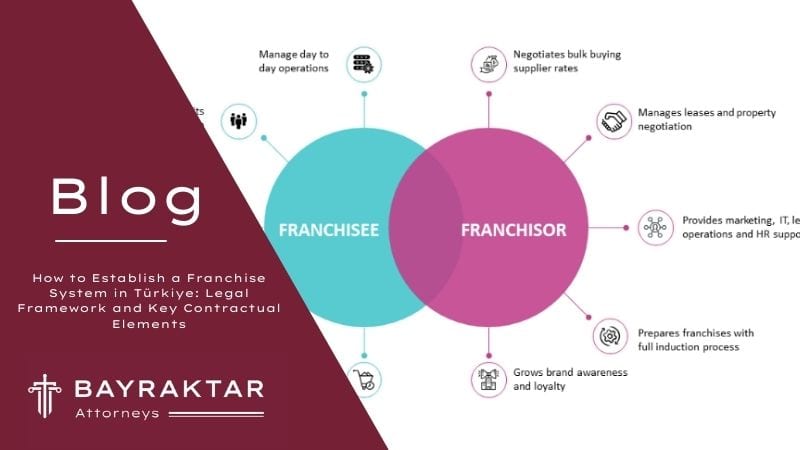
This structure benefits both parties. The franchise provider (franchisor) can expand its brand without opening each location itself. The franchise investor (franchisee) can operate a business based on an already established system rather than building a brand from scratch.
To maintain brand consistency, the franchisor usually supervises the franchisee through audits, operational guidelines, and training systems.
In many franchise systems:
The initial investment is made by the franchisee
Products are purchased directly from the franchisor or approved suppliers
Operational standards are strictly monitored
This structure helps maintain brand reputation and ensures that customers experience consistent quality across different locations.
Essential Elements of Franchise Agreements
A well-prepared franchise agreement must include several critical provisions in order to function effectively. The most important elements typically include the following.
Brand Usage Rights and Limitations
The franchisee receives the right to use the brand name, logo, and operational concept. However, this right is limited to the conditions defined in the agreement. The franchisor retains ownership of the brand and controls how it may be used.
Fee Structure
Franchise agreements normally include several types of payments.
Entry Fee
This is a one-time payment made by the franchisee when joining the system. It compensates the franchisor for providing:
brand access
operational know-how
training
business setup support
Royalty Fee
Royalty payments are usually calculated as a percentage of the franchisee's turnover. These payments represent the ongoing compensation for the use of the brand and operational system.
Advertising and Marketing Contribution
Franchise networks often require franchisees to contribute to a centralized marketing fund. These funds may support:
national advertising campaigns
social media promotion
public relations activities
brand awareness initiatives
Supply and Procurement Systems
Many franchise systems require franchisees to purchase products, materials, or equipment from the franchisor or approved suppliers. This ensures product quality and brand consistency across all franchise locations.
Critical Operational Elements of Franchise Systems
In addition to financial arrangements, successful franchise systems must establish clear operational rules. Important operational elements include the following.
Establishing Brand Standards
Franchise networks must define strict brand standards related to:
store design
product quality
service procedures
employee training
customer experience
Without clear standards, brand reputation can quickly deteriorate.
Training and Support Systems
Franchise providers usually offer training programs for franchisees and their employees. These programs may cover:
Continuous training ensures that franchise locations operate according to the brand's expectations.
Regional Strategy
Franchise systems must carefully plan territorial rights. Agreements should specify:
the geographic area assigned to the franchisee
whether exclusivity applies
whether additional franchise locations may open nearby
This prevents conflicts between franchisees.
Supply and Logistics Management
The franchisor must ensure that supply chains operate efficiently so that franchise locations can access products and materials without disruption. This is particularly important for food, retail, and service brands.
Termination Conditions in Franchise Agreements
Franchise agreements must also clearly regulate termination conditions. Important provisions typically include:
the duration of the agreement
renewal options
justified termination reasons
cure periods that allow the franchisee to correct violations
Clearly defining these conditions helps avoid disputes between the franchisor and franchisee. The distinction between ending a contract for cause and stepping away from it matters here, much as it does in the broader question of termination versus withdrawal under Turkish contract law.
Legal Consequences After Termination
What happens after a franchise agreement ends is just as important as the agreement itself. Franchise contracts must regulate post-termination obligations such as:
stopping the use of the brand name
removing logos and brand elements
returning confidential materials
transferring or liquidating inventory
The agreement should also determine how remaining stock will be transferred or returned and how prices will be calculated.
Another important issue is the non-competition obligation, which may restrict the franchisee from operating a competing business for a specified period after termination.
Protection of Intellectual Property Rights
Intellectual property protection is one of the most critical aspects of a franchise system. Franchise agreements must clearly state that elements such as:
trademarks
logos
designs
operational systems
business methods
belong to the franchisor.
If these rights are not properly protected, a franchisee may attempt to register the brand or similar intellectual property under their own name. For this reason, it is extremely important that trademark and patent registrations are completed by the franchisor before launching the franchise system.
Proper intellectual property protection helps avoid trademark infringement disputes and ensures the brand remains under the control of its rightful owner.
Why Legal Structuring Is Critical for Franchise Systems
Although franchising offers major growth opportunities, poorly drafted agreements can lead to serious legal conflicts. Common disputes in franchise relationships involve:
A carefully prepared legal framework significantly reduces these risks and allows the franchise system to grow in a stable and predictable manner. A franchise agreement rarely stands alone; it works alongside the other contracts a company needs in Türkiye and, where physical outlets are involved, the terms of any commercial rental contracts signed for each location.
Legal Assistance for Franchise Systems in Türkiye
At Bayraktar Attorneys, we provide legal services to companies that wish to establish or expand franchise systems in Türkiye. Our services include:
drafting franchise agreements
intellectual property protection
trademark registration
franchise network structuring
dispute resolution and litigation support
Our goal is to help brands expand safely while protecting their intellectual property and contractual rights.
Conclusion
Franchising is one of the most effective business expansion models when supported by a strong legal framework. A successful franchise system must clearly define:
With proper legal structuring, franchising can provide sustainable growth for brand owners while offering profitable opportunities for investors. Companies that plan to build a franchise network in Türkiye should carefully structure their agreements and protect their intellectual property rights from the beginning. Professional legal support ensures that the franchise system operates smoothly and avoids future disputes.