Quick answerIn 2025, Türkiye capped private second-hand car sales at three per year, with anyone selling more without a license classified as engaging in unauthorized commercial activity. Electric vehicle sales crossed the 10% market-share threshold, helped by favorable tax rates for EVs under 160kW, while customs duty on vehicles imported from China rose to 50%. Commercial vehicles must now be registered in the National Vehicle Identification System (UTTS), which digitally tracks fuel consumption for the tax authority.
Türkiye's Automotive Industry in 2025: An Evolving Landscape
Türkiye's automotive market continues to evolve as one of the most dynamic and strategic sectors in the country's economy. With regulatory, fiscal, and technological advancements accelerating, 2025 presents both opportunities and challenges for global investors, manufacturers, and distributors.
Consumer Trends and Market Dynamics
Preference for Compact and Electrified Vehicles
Despite ongoing economic volatility, demand for new vehicles in Türkiye remains resilient. The market has shifted toward compact, fuel-efficient, and electrified vehicles, particularly due to the impact of the Special Consumption Tax (ÖTV).
Rise of Electric Vehicles
Electric vehicle (EV) sales have now crossed the 10% market share threshold. Favorable tax rates for EVs with engines under 160kW have significantly contributed to this growth.
Continued Popularity of SUVs
SUVs are the most preferred body type in the Turkish market. Compact sedans and hatchbacks also maintain strong demand due to their affordability and lower tax brackets.
Key Legal and Regulatory Developments
New Rules for Second-Hand Vehicle Sales
Türkiye now limits individuals and businesses to a maximum of three second-hand car sales per year. Selling more than three vehicles without a license is now classified as unauthorized commercial activity.
Updated EV Import and Certification Standards
Only electric and plug-in hybrid vehicles that comply with technical standards certified by the Turkish Standards Institution (TSE) can be imported. New customs duties now apply to vehicles imported from China, with rates increased to 50%. Investors moving a personal vehicle should review our guide on transferring and importing a car into Turkey, and those handling high-value vehicles should note the customs procedures for international luxury car transfers.
Mandatory Smart Driving Features
All new vehicles must now include advanced safety technologies such as:
- Lane-keeping assist
- Emergency braking
- Driver fatigue detection
- Rear-view cameras and sensors
These requirements are aligned with EU's GSR II standards.
National Vehicle Identification System (UTTS)
A new nationwide UTTS system is now mandatory for commercial vehicles. Fuel consumption is digitally tracked and linked to the tax authority, discouraging unregistered fuel claims. For a deeper explanation, see our overview of the National Vehicle Identification System (UTTS) in Turkey.
Stricter Licensing for Charging Stations
Electric vehicle charging operators must acquire new licenses with updated documentation. The new deadline for compliance is July 31, 2025.
Expanded Vehicle Inspection Workforce
New regulations allow vocationally trained and experienced staff to become vehicle inspectors, broadening the workforce pool for vehicle testing stations.
Easier Plate Reissuance and Registration
Lost license plates can now be reissued online via the e-Government portal. Trailers and semi-trailers under 750 kg are now subject to registration procedures.
Special Rules for Disabled Drivers
Vehicles registered to disabled individuals must now include registry notations specifying who is authorized to drive them. Violations are reportable to the local tax authorities. Employers should also be aware of the related rules on who can drive a company car in Türkiye.
Strategic Outlook for Foreign Investors
Local Production & Market Entry
Major Chinese EV brands such as BYD and Chery are actively progressing toward establishing manufacturing plants in Türkiye. This aligns with the government's goal of reducing import dependency.
Domestic EV Expansion: TOGG
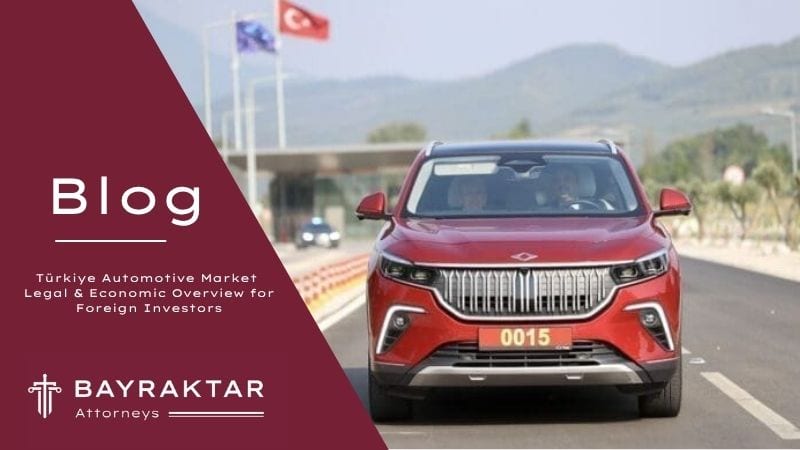
The domestic electric carmaker TOGG is set to launch its second model, the T10F, a fastback EV, expanding its market presence alongside the existing T10X SUV.
No Confirmed Updates to Consumer Credit Limits or Tax Brackets
Although revisions to ÖTV brackets and consumer credit limits are under consideration, no confirmed changes have been published. A limited scrap vehicle incentive is still under parliamentary review.
Also read: Legal Considerations for Starting a Rent a Car Business in Turkey.
What to Expect in 2025
- EV adoption will continue accelerating, driven by price-sensitive consumers and expanding infrastructure.
- Small-engine and hybrid cars will dominate the market due to their lower tax burden.
- SUVs and automatic transmissions will remain the preferred choices for Turkish consumers.
- Import rules will become stricter, especially for Chinese vehicles.
- Local production incentives will benefit investors establishing manufacturing or assembly operations in Türkiye.
Conclusion
Türkiye's automotive sector is undergoing a transformation in 2025. With growing EV sales, tighter regulations, and enhanced consumer demand, the market offers lucrative opportunities for foreign investors, particularly those ready to adapt quickly and align with local compliance and fiscal structures.
See also: Legal Processes for Opening Electric Vehicle Charging Stations.