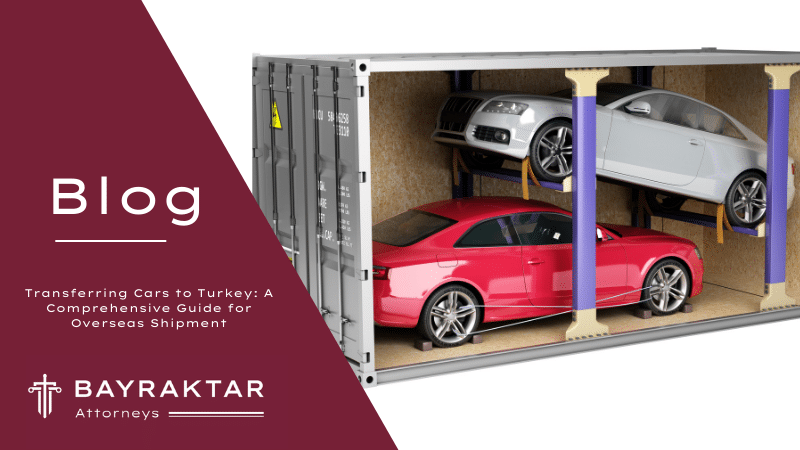
If you are relocating to Turkey or purchasing a vehicle from abroad, bringing your car involves a complex process governed by strict legal requirements, customs regulations, and fees. Navigating these intricacies requires specialized knowledge of documentation and international shipping. At Bayraktar Attorneys, we specialize in providing comprehensive legal support for overseas vehicle transfers to ensure a smooth, compliant, and hassle-free experience. For a shorter overview of the basics, see our brief guide to importing a car.
Understanding the Importation Process and Requirements
To successfully import a car, you must first obtain a vehicle import permit from the Ministry of Trade to ensure the vehicle complies with Turkish standards. It is essential to thoroughly research customs regulations regarding age limits, specifications, and taxes before initiating the transfer. Additionally, you must select a reliable international shipping method, such as container shipping or roll-on/roll-off (Ro-Ro) services, balancing factors like cost, security, and convenience. Once the vehicle arrives, it must pass an inspection by the General Directorate of Security and be registered with the local traffic registry office.
Vehicle Standards, Modifications, and Financial Costs
Turkey enforces specific requirements for imported vehicles. Generally, the car must be left-hand drive, under ten years old, and fully compliant with Turkish emission and safety standards. In some cases, vehicles may require modifications, such as converting to a left-hand drive system or adjusting emissions to meet local regulations. Because European emission and safety standards closely align with Turkey's, importing a car from Europe is typically a more straightforward process.
Regardless of the vehicle's origin, the financial costs of importing can be significant. In addition to the purchase price, you will be responsible for various taxes and fees, including customs duties, value-added tax (VAT), environmental taxes, and inspection fees. These expenses fluctuate based on the vehicle's make, model, age, engine capacity, and overall value. For high-value imports, our notes on international luxury car transfers and customs procedures cover additional considerations.
Importing a Vehicle Using a Power of Attorney
You can legally bring someone else's car into Turkey if the owner grants you a specially drafted Power of Attorney authorizing the transfer. A Power of Attorney is strictly valid for the initial entry of the vehicle, and corporate-owned vehicles cannot be imported using this method. Initially, this proxy allows you to drive the car for three months. However, Bayraktar Attorneys can help extend this period up to two years by securing a residence permit or citizenship, and up to four tax-free years for foreign retirees or students residing in Turkey. Interestingly, if a car is imported via proxy, only the designated proxy holder and their eligible relatives can drive it; the actual owner is legally prohibited from getting behind the wheel while the vehicle remains in Turkey.
Strict Usage Rules for Foreign-Plated Vehicles
Turkey enforces rigid and uncompromising usage restrictions on foreign-plated vehicles. These cars can only be driven by the temporary entry permit holder or their immediate family members, specifically a spouse, parent, or child. A crucial legal condition is that these permitted relatives must also be residents abroad. No other individuals are permitted to drive the car under any circumstances, even if the permit holder is physically present in the vehicle as a passenger. During roadside inspections, drivers must carry documentation proving their relationship to the permit holder and their foreign residency status. Failing to produce these documents will result in the vehicle being banned from traffic and handed over to customs for legal action. Once your vehicle is registered locally, it must also be enrolled in the National Vehicle Identification System (UTTS).
Comprehensive Documentation Required for Customs
Successfully navigating customs requires a detailed and extensive portfolio of paperwork. You must provide your passport showing your latest entry and exit stamps, along with identity cards or residence permits from both your home country and Turkey. Furthermore, authorities require the original vehicle title or registration certificate, a purchase invoice or bill of sale verifying the transaction, and a valid driver's license from your home country.
You will also need to present all relevant shipping documents, such as the bill of lading and shipping insurance, alongside completed customs declaration forms detailing the vehicle's specifications. Since driving uninsured is illegal, you must secure either an internationally recognized car insurance policy or a local Turkish traffic insurance policy. Finally, an authorization document granting power to your customs broker is mandatory to initiate the official transactions.
Secure Your Vehicle Transfer with Bayraktar Attorneys
Managing these legal intricacies, completing extensive customs declarations accurately, and coordinating with shipping companies can be an overwhelming task. By partnering with Bayraktar Attorneys, you gain expert legal guidance through every step of the process. We review your documentation thoroughly, liaise with shipping professionals, handle all customs procedures, and connect you with trusted experts if your vehicle requires standard modifications. Reach out to Bayraktar Attorneys today to let our dedicated team handle the legal complexities, allowing you to focus completely on your relocation plans.