Every summer, road traffic into Türkiye increases sharply as the expatriate season, gurbetçi sezonu, brings large numbers of Turkish citizens and their families living abroad back into the country, alongside ordinary tourists and returning residents. This period, running roughly from late June through mid September each year, places heavy pressure on the land border crossings shared with Greece and Bulgaria, particularly Kapıkule, İpsala, Hamzabeyli, and Pazarkule. Turkish authorities coordinate an annual seasonal management plan with their Bulgarian counterparts each year to keep these crossings moving, and travelers entering Türkiye during this period, or at any other time of year, should understand both the current customs allowances and how the border management measures work in practice.
Quick Answer: Türkiye and Bulgaria coordinate additional platforms, staff, and security measures at the shared land border crossings each summer, particularly during the expatriate season running from late June to mid September, to manage the seasonal surge in vehicle and passenger traffic. Travelers must pass through either the green channel, for those with nothing to declare, or the red channel, for those carrying goods subject to customs duty, and customs officers may request a declaration regardless of which channel is chosen. Personal duty free allowances cover a defined quantity of tobacco, alcohol, cosmetics, food, and other personal items, while a foreign mobile phone brought into Türkiye must be registered for a fee that is revised annually and, as of 2026, runs into the tens of thousands of Turkish Lira, considerably higher than in recent years, so the current figure should always be confirmed before relying on an older cited amount.
1. Seasonal Border Management at Land Crossings
Each year, ahead of the summer travel season and major religious holidays, the Turkish authorities, working with Bulgarian border officials, hold coordination meetings and implement additional measures at the main land crossings to manage the seasonal surge in traffic. This has included, in various years, additional entry and exit platforms, extra customs and passport officers, mobile service points from postal and banking providers, additional treasury cashier units, increased security presence, and improved signage and traffic flow management within the crossing complexes themselves. The specific scale of these measures is reassessed and announced ahead of each travel season, so travelers should check current announcements from the Trakya Customs and Trade Regional Directorate or the Ministry of Trade closer to their travel date, rather than relying on a specific capacity figure from a previous year.
The scale of this seasonal traffic is genuinely significant: in recent years, the shared border crossings with Bulgaria and Greece have processed well over a million vehicles and several million passengers across a single summer season, with particularly sharp spikes around major religious holidays that fall within the peak travel window. This volume is precisely why the annual coordination between Turkish and Bulgarian authorities, rather than a one time infrastructure change, is the more durable feature of how this seasonal congestion is actually managed year over year.
The expatriate season itself is generally recognised as running from late June through mid September, with the heaviest congestion typically occurring around major religious holidays that fall within or near this window. If you are planning repeat trips during this period, review our guide on the 90 days in 180 rule for re-entering Turkiye, since frequent border crossings can raise separate questions about permitted stay duration that are distinct from the customs matters covered in this guide.
2. Real Time Border Monitoring and Services
During the peak summer period, live camera feeds showing current conditions at the major border crossings are generally made available through the Trakya Customs and Trade Regional Directorate's website, allowing travelers to check congestion levels before setting out. Mobile service points from the postal service and major banks are commonly deployed at high traffic crossings such as Kapıkule during this period, alongside additional treasury cashier units, increased security presence, designated rest areas, and improved internal traffic flow through updated road markings and signage.
3. Entering Türkiye: Customs Channels
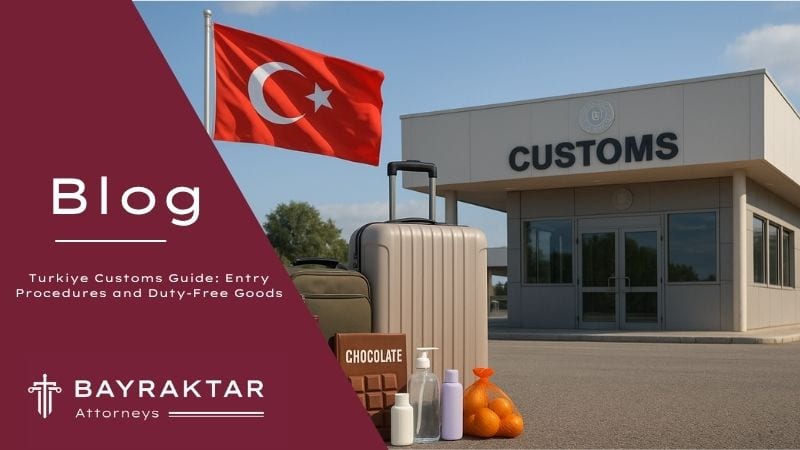
Travelers entering Türkiye must pass through either the green or red customs channel at land, sea, or airport terminals.
3.1 The Green Channel
The green channel is for travelers carrying no goods that require declaration, meaning their belongings fall entirely within the personal exemption allowances described in section 4 below.
3.2 The Red Channel
The red channel is for travelers carrying goods subject to customs duty, or who are unsure whether their belongings require declaration. Choosing the red channel when uncertain is generally the safer approach, since customs officers may still request a declaration from travelers in the green channel, and being found with undeclared dutiable goods after choosing the green channel is treated more seriously than an item declared through the red channel that turns out to fall within an allowance after all.
3.3 What Must Be Declared
Even personal travel items must be declared to customs officials where requested. Items such as laptops or valuable electronics may require a verbal declaration, even where the traveler intends to leave the country with the item again, since this declaration can help establish that the item was brought into the country temporarily rather than imported for permanent use. Bringing prohibited or controlled items into Türkiye can result in significant fines or, in more serious cases, imprisonment.
4. Passenger Allowances
Türkiye maintains defined personal exemption allowances for travelers, covering the categories below. These figures are periodically reviewed, so travelers should confirm the current allowance for their specific situation before relying on a previously cited figure, particularly for categories tied to value in euros or Turkish Lira rather than a fixed physical quantity.
4.1 Tobacco Products
The personal allowance generally covers 600 cigarettes, 100 cigarillos of up to 3 grams each, 50 cigars, 250 grams of pipe tobacco, and 250 grams of rolling tobacco together with 200 rolling papers.
4.2 Alcohol
The allowance generally covers 1 litre of beverages with an alcohol content above 22 percent, or 2 litres of beverages with an alcohol content of 22 percent or below.
4.3 Cosmetics
A combined maximum of 600 millilitres covers cologne, perfume, lavender water, essence, and lotion, alongside an allowance of up to 5 personal care or makeup products.
4.4 Food
The allowance generally covers 1 kilogram each of tea, instant coffee, roasted coffee, chocolate, and sugar based sweets, with travelers able to allocate the full 2 kilogram chocolate and sweets portion to either category rather than splitting it evenly.
4.5 Medicines
With proper supporting documentation, such as a prescription or medical report, travelers may bring in reasonable quantities of medication intended for their own personal treatment.
4.6 Pets
Travelers may generally bring up to 2 pets, limited to cats, dogs, or birds, or up to 10 aquarium fish, provided the required veterinary and identity documentation is presented and the animals are made available for inspection.
4.7 Gifts and Other Goods
Travelers may generally bring non-commercial personal or gift items up to a set value threshold, with a lower threshold applying to travelers under a certain age. Mobile phones are specifically excluded from this general gift exemption and must be brought in personally by the traveler rather than treated as a gift item within this allowance, given the separate registration regime described in section 5 below.
4.8 Religious Dietary Requirements
Tourists with religious dietary requirements may generally bring in special food items where this is certified by a tourism agency and the food is guaranteed for the traveler's own personal use during their stay.
5. Mobile Phones Brought Into Türkiye
A foreign registered mobile phone can generally be used in Türkiye without formal registration for a limited grace period after entry, commonly cited as around 120 days from the point a Turkish SIM card is first inserted, after which the device will no longer connect to Turkish mobile networks unless it has been properly registered.
5.1 The Registration Fee
To register a foreign phone for continued use, a registration fee, tied to Türkiye's official annual revaluation rate, must be paid before the device is added to the national registry maintained by the Information and Communication Technologies Authority, BTK. This fee increases each year in line with the same revaluation mechanism that adjusts numerous other Turkish administrative fees, and for 2026 it has increased substantially compared with the prior year's figure, reaching into the tens of thousands of Turkish Lira. Because this specific figure has been reported inconsistently across different sources this year, and because it is set to change again at the start of each calendar year, travelers should confirm the exact current amount directly through the official e-Devlet portal at the time of registration rather than relying on any previously published figure, including figures presented as current in earlier guidance.
5.2 How Registration Works
Registration is generally completed through the e-Devlet portal, requiring the traveler's passport details and confirmation that they have genuinely travelled abroad, and the applicable fee can typically be paid directly through the portal or through the mobile or online banking application of a participating bank. Only one phone per traveler is generally eligible for this exemption based registration process within a given period, and a customs declaration confirming the phone's IMEI number at the point of entry can be important supporting evidence when completing the registration, so travelers bringing a phone into Türkiye should request this declaration from the customs officer at their point of entry rather than assuming it will be generated automatically.
6. Bandrol Fee for Electronic Devices
Certain electronic devices brought into Türkiye for personal use, such as televisions, are subject to a one time fee commonly referred to as a bandrol fee, calculated based on the specific type of device and, for televisions, screen size. This is separate from, and in addition to, any other applicable customs duty or registration requirement described elsewhere in this guide.
7. Goods Valued Up to 1,500 Euros
Goods brought into Türkiye valued up to 1,500 euros are generally subject to fixed tax rates depending on their country of origin, with a lower rate applied to goods originating from European Union countries and a higher rate applied to goods from non-EU countries, plus an additional charge for goods falling under Special Consumption Tax List IV. Where the value of personal or gift items exceeds the applicable exemption threshold described in section 4.7 above, only the portion of the value exceeding that threshold is taxed, rather than the full value of the item.
Separate rules apply specifically to goods ordered from abroad for delivery to Türkiye, as opposed to goods physically carried by a traveler; see our article on the customs rules in Turkiye for foreigners ordering goods from abroad for that distinct scenario.
7.1 How Value Is Determined
The value of goods for customs purposes is generally based on the invoice, receipt, or other proof of payment presented at the border. Where no such documentation is provided, or where the declared value appears too low relative to the item's genuine worth, customs officials will independently assess the value for tax purposes rather than accepting the traveler's own figure.
8. Extended Timeframe for Personal Belongings Shipments
Where a traveler is shipping personal belongings separately from their own physical entry into Türkiye, the applicable exemption generally requires the shipment to arrive within a window running from one month before to three months after the traveler's own arrival. Where delays occur due to genuine force majeure circumstances, travelers may generally apply once for an extension of this window, of up to a further six months, though this extension is not automatic and requires a specific application demonstrating the qualifying circumstances.
9. Special Considerations for Gold and Precious Metals
Travelers bringing gold or other precious metals into or out of Türkiye are subject to their own specific, separate rules and limits, distinct from the general personal allowances described above, and the consequences of exceeding the applicable limit can be significant. For the detailed allowances that apply specifically to this category, see our guide on bringing gold and precious metals to Turkiye, and for an explanation of what can happen if the applicable limit is exceeded, see our guide on what happens if you are caught exceeding the gold limit at Turkish customs.
10. Frequently Asked Questions
10.1 When does the busiest border crossing season occur?
Generally from late June through mid September each year, coinciding with the expatriate season and major summer travel, with the heaviest congestion typically around major religious holidays that fall within this window.
10.2 How do I know whether to use the green or red customs channel?
Use the green channel only if you have nothing requiring declaration; use the red channel if you are carrying dutiable goods or are unsure, since customs officers can still question travelers in either channel.
10.3 How much does it cost to register a foreign mobile phone in Türkiye in 2026?
The fee has increased substantially compared with the prior year and reaches into the tens of thousands of Turkish Lira, but figures have been reported inconsistently across sources this year, so confirming the exact current amount through the official e-Devlet portal before paying is strongly advisable.
10.4 How long can I use a foreign phone in Türkiye before I need to register it?
Generally around 120 days from when a Turkish SIM card is first inserted, after which the device loses network connectivity unless it has been properly registered.
10.5 Can I bring more than one duty free mobile phone into Türkiye?
Generally no. Only one phone per traveler is typically eligible for this exemption based registration process within a given period, and mobile phones are specifically excluded from the general personal gift allowance.
10.6 What happens if I don't declare something I should have?
Undeclared dutiable goods discovered by customs, particularly where the green channel was used, can result in fines or, for prohibited or controlled items, more serious criminal consequences.
10.7 Do I need documentation to bring medication into Türkiye?
Yes, generally a prescription or medical report supporting that the medication is intended for your own personal treatment, in reasonable quantities.
10.8 Can I bring my pet into Türkiye?
Yes, generally up to 2 pets limited to cats, dogs, or birds, or up to 10 aquarium fish, provided the required veterinary and identity documents are presented and the animals are available for inspection.
10.9 How is the value of goods determined for customs tax purposes?
Based on the invoice, receipt, or other proof of payment; where this is not provided or appears too low, customs officials will independently assess the value.
10.10 Do different rules apply to goods ordered online from abroad compared with goods I carry myself?
Yes, goods ordered from abroad for delivery are subject to a separate set of rules distinct from the personal traveler allowances described in this guide.
10.11 What if my shipped personal belongings are delayed beyond the standard timeframe?
Where the delay is due to genuine force majeure, you may apply once for an extension of up to six months beyond the standard window, though this requires a specific application rather than being automatic.
10.12 Are gold and precious metals covered by the general personal allowances?
No, these are subject to their own specific, separate limits and rules, and exceeding the applicable limit can lead to significant legal consequences distinct from ordinary customs violations.
10.13 Why does the mobile phone registration fee keep increasing every year?
It is tied to Türkiye's official annual revaluation rate, the same mechanism used to adjust numerous other administrative fees, meaning it increases automatically each year rather than remaining fixed.
10.14 Should I request a customs declaration for my phone when I enter Türkiye?
Yes. A declaration confirming your phone's IMEI number at the point of entry can serve as important supporting evidence when you later complete the registration process, so it is worth requesting this from the customs officer rather than assuming it happens automatically.
11. Conclusion
Entering Türkiye smoothly, whether during the busy summer expatriate season or at any other time of year, depends on understanding both the seasonal border management measures in place and the current personal customs allowances, particularly for categories like mobile phone registration where the applicable fee changes every year and has increased substantially in 2026. Confirming current figures before travel, choosing the correct customs channel, and keeping supporting documentation for any declared items are the most reliable ways to avoid unnecessary delay or dispute at the border.
For guidance on a specific customs question, a border related dispute, a gold or precious metals declaration issue, or broader questions about your immigration status in Türkiye, our team is here to help.